
The work on a therapist's calendar does not always fit inside an individual therapy chart. A practice may provide one-to-one consultation, group consultation, clinical supervision, professional training, parent education, relationship-skills workshops, or other group services alongside psychotherapy.
Those services still need real practice operations. There are people to schedule, agreements to share, attendance to track, notes to keep, messages to send, invoices to collect, and receipts to provide. What they do not need is a diagnosis, treatment plan, insurance claim, or superbill added simply because the software has no other place to put them.
A consultation client is not a therapy client
A consultation client, sometimes called a consultee, is receiving a professional consultation service. That distinction should remain visible in the language and structure of the record.
PracticeRunner treats an individual consultation as a case in its own right. The consultation client can have appointments, consultation notes, secure messages, consultation-specific agreements or forms, invoices, payments, receipts, and appropriate portal access. Psychotherapy-specific fields such as diagnoses, treatment plans, insurance claims, and superbills stay out of the way by default.
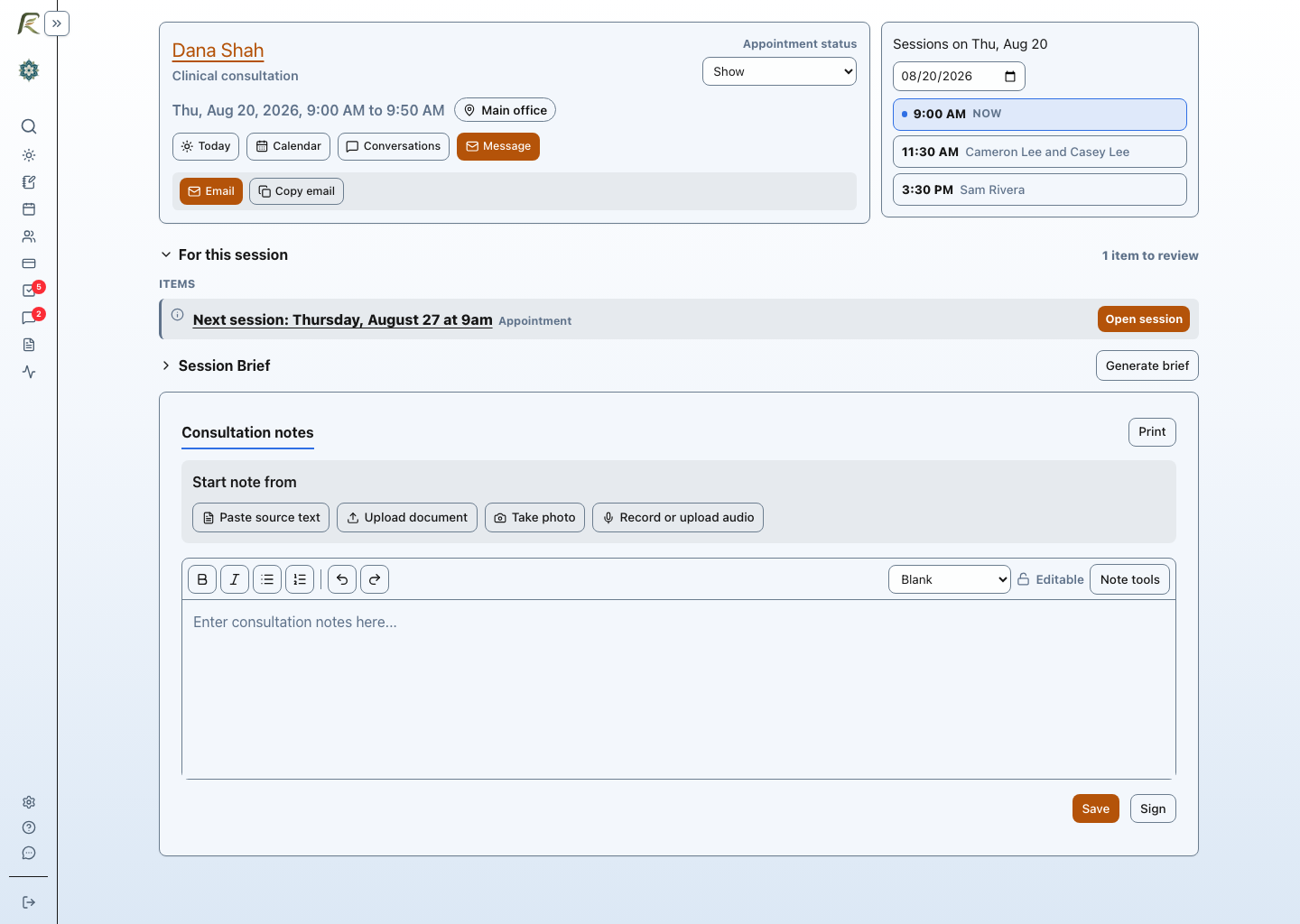
A consultation group needs a home between meetings
A consultation group is more than several contacts attached to a repeating calendar event. The group has continuity: a name, participants, a schedule, attendance, shared agreements, communication, billing arrangements, and a history of consultation notes.
One consultation-group case keeps that structure intact across meetings. Participants can miss a meeting without canceling the group. Billing can go to individual participants, a shared billing contact, or a sponsoring organization when configured. The group can use consultation language throughout without presenting its clinician participants as psychotherapy patients.
Workshops should not need an artificial diagnosis or procedure code
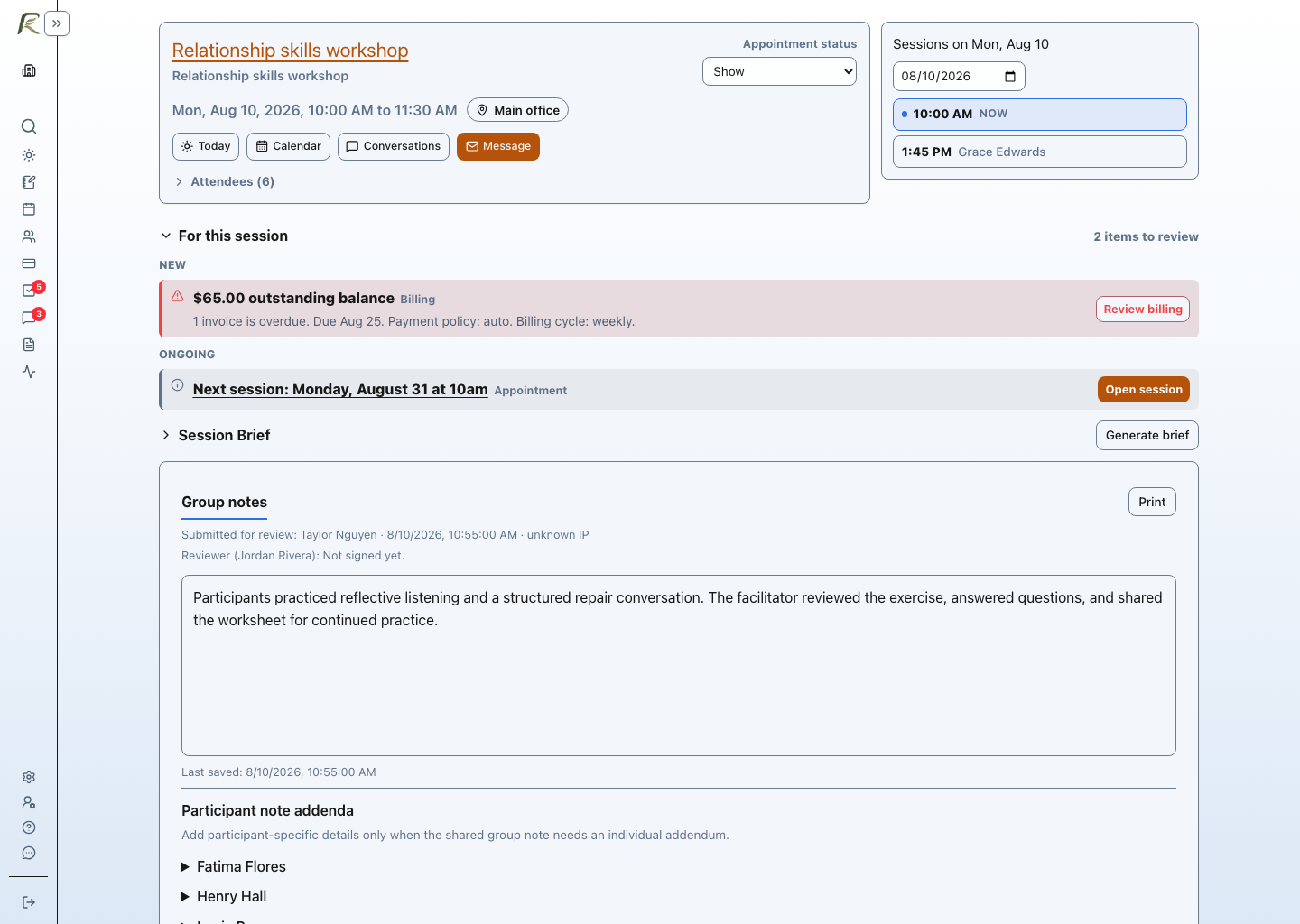
Non-clinical workshop groups can include trainings, classes, parent education, relationship-skills groups, coaching groups, and therapist-facing business workshops. The participants may include existing therapy clients, consultation clients, or people who only attend the workshop.
The workshop itself remains a distinct case. It can hold the participant roster, appointment series, materials, registration forms, attendance, secure messages, invoices, portal payments, receipts, and group notes. Because the service is not psychotherapy, therapy intake prompts, diagnoses, treatment plans, insurance claims, and superbills remain hidden by default.
The same case model, without pretending the services are the same
PracticeRunner uses a case as the stable organizing structure for an individual client, couple, family, therapy group, individual consultation, consultation group, or workshop group. The shared structure keeps scheduling, documentation, communication, forms, billing, payments, and follow-up connected. The available tools and language adapt to the service being provided.
That is a more complete view of a practice, but not a blurred one. It considers clinical work, relationships, and practice operations together while preserving the difference between psychotherapy, professional consultation, and non-clinical services. People can participate in more than one kind of case without one relationship being mistaken for another.
The aim is an unobtrusive relational EHR: keep relevant context close, preserve clinician control, and stay out of the way when the software has nothing useful to add.
Can consultation stand on its own?
Look for consultation-specific notes, forms, language, scheduling, and billing without psychotherapy requirements.
Does the group remain intact between meetings?
A consultation or workshop group should retain its roster, history, attendance, and billing arrangements between meetings.
Can one person have several roles?
A person may be a therapy client in one case and a consultation or workshop participant in another without those services being merged.
Does billing match the service?
Consultation and workshops should use clear invoices and receipts without inventing insurance-ready codes or superbills.
Choose the case type from the work being done
If the service is psychotherapy, use an individual, couple, family, or therapy-group case. If one professional receives consultation, use individual consultation. If several professionals receive consultation together, use a consultation group. If the group is a class, training, coaching service, or other non-therapy offering, use a workshop or skills group.
Our help guide, Choosing a Case Type for Consultation, Workshops, and Groups, compares the options side by side. For detailed setup, see Individual Consultation, Group Consultation, and Workshop and Skills Groups.
Bring the whole practice
Use one system for the work you actually do
PracticeRunner is available for independent therapists and growing practices, with hands-on onboarding and direct founder support during this early stage.